Organisational Chart
General Management + 11 divisions
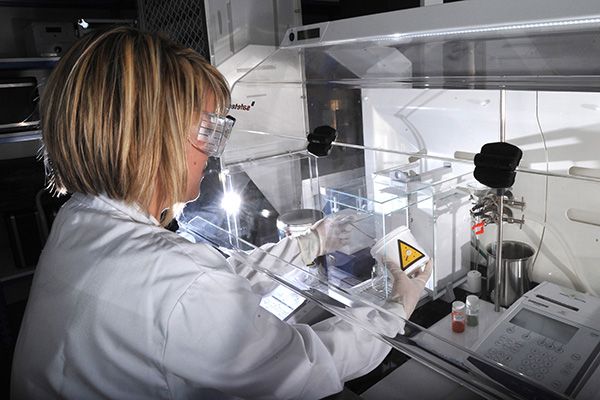
Studies and research
© Jean-Pierre Dalens INRS
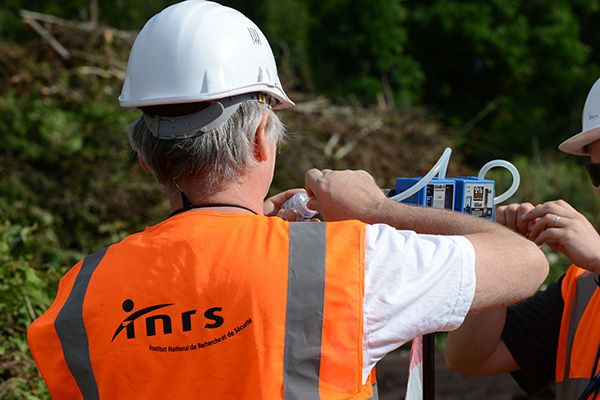
Assistance
© Jean-Pierre Dalens INRS
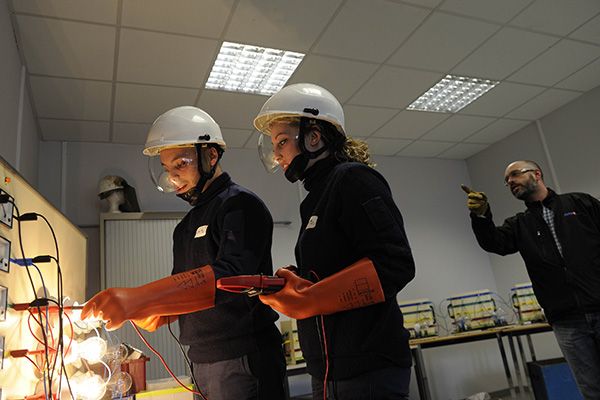
Training
© Patrick Delapierre INRS

Information
© Oeuvre INRS
General Management
General Management oversees all activity at the Institute’s two sites.
It directly manages five operational, functional and support directorates and three units.
INRS Management team:
- Stéphane Pimbert, Director General
- Marjorie Fougère, Scientific Director
- Séverine Brunet, Director of Prevention Applications
- Nathalie Guillemy, Director of the Paris Center
- Christian Hennequin, Director of General Administration
- François Rousseau, Director of the Lorraine Center
Operational Management
The Paris and Lorraine Center Directorates oversee teams and resources at the two sites.
The Scientific Board and Prevention Applications Executive work together to develop programmes and annual activity reports.
- The Scientific Board Executive defines the Institute’s scientific policy. It oversees Studies and Research activities (planning, follow-up and knowledge transfer).
- The Prevention Applications Executive coordinates, carries out and monitors activities related to assistance, training and information. It also acts as an interface in the Institute’s dealings with the occupational risk branch of France’s national health insurance fund and other prevention partners.
Support Activity Management
- The General Administration Directorate provides administrative, financial, accounting, computing, equipment and logistical support for the Institute at both sites.
3 Units
- Horizon Scanning and Foresight Unit conducts work to identify changes in work to anticipate their impact on professional risks and guide prevention needs.
- The Common processes unit works to improve cross-disciplinary activities and projects at INRS. It also manages INRS’ quality processes.
- The internal communications unit implements resources and activities to accompany INRS teams, strategies, activities and projects.
11 Divisions
To fulfil its missions on strategic themes for prevention, INRS is active in 4 areas: studies and research, training, information and assistance.
11 divisions, located at the Paris or Lorraine Centers, ensure the smooth running of all actions defined in the annual plan.
Expertise and technical advice
This department provides scientific and technical support in the following areas:
• prevention of all types of occupational risks,
• design and adaptation of working environments to suit the characteristics of workers.
Information and Communication
This division provides organisations (employers, employees, health and safety officers, occupational health services, etc.) with the knowledge, procedures and tools they need to take action to prevent occupational risks. It designs, produces, distributes and promotes the INRS’s range of information and awareness-raising materials (leaflets, posters, videos, magazines, websites, etc.).
Medical Research and Support
This division carries out support (prevention and assessment) and information-provision activities, particularly for occupational health services. Its work covers all medical aspects of occupational risks, whether they are:
• chemical,
• biological,
• physical,
• organisational.
Occupational epidemiology
This division conducts epidemiological studies aimed at highlighting deteriorations in health and occupational injuries due to working environments, occupational exposures to substances, or psychosocial factors. The studies carried out examine respiratory and cardiovascular pathologies, allergies, cancers, musculoskeletal disorders, reproductive disorders, disorders related to psychosocial factors, or occupational injuries. The division also conducts evaluative studies. The various studies can require appropriate statistics methods to be developed internally.
Pollutants metrology
The aim of works of the Pollutants Metrology Division relates to the prevention of occupational diseases. They mainly concern the development and validation of methods and techniques for the assessment and characterization of occupational exposure to gaseous pollutants and aerosols of chemical and biological agents in the atmosphere of workplaces.
Process engineering
The mission of the "Process Engineering" division is to research, study and promote prevention solutions in response to problems of exposure to toxic agents in their various forms (gas, liquid, solid or aerosol). The department favors upstream technical prevention solutions that will lead to a control of the source of pollution.
Research, Monitoring and Documentation Support
This division is responsible for monitoring, providing information and offering support in the field of health and safety at work. This work involves:
• building up an international and multidisciplinary collection of documents,
• drawing on this collection to answer the 25,000 enquiries received each year.
Sciences applied to work and organizations
The SATO Division conducts scientific work aimed at improving work conditions by producing and sharing knowledge, approaches, methods and tools resulting from research, intended for occupational risk prevention players. Centred on the analysis of real work activity, business practices and experiments simulating work situations, the issues addressed cover both risk assessment in connection with the physical, psychological, psychosocial, organisational, technological and demographical aspects, and the use of strategic and managerial prevention actions to manage occupational safety and health.
Toxicology and biomonitoring division
The Toxicology and Biomonitoring division takes part in many projects in cancerology, reprotoxicology, immunotoxicology, neuro and ototoxicity, dermal absorption and in biomonitoring. The researchers of the division work in laboratories with in vivo, in vitro, and in silico models, and in factories to collect biological samples from workers. Its missions are to identify deleterious effects of chemicals, noise or combined exposures, as well as to prevent risks encountered by workers.
Training
This division designs, delivers and promotes occupational health and safety training programmes and resources. Its work is structured around four key areas:
• initial training,
• direct training of specialists within the Occupational Risk Health Insurance Prevention Network,
• training for company staff (employees, health and safety officers, occupational health professionals, etc.),
• the development of training programmes and tools.
Work equipment engineering division
The activities of the Work Equipment Engineering division are aimed at the prevention of the occupational diseases due to physical nuisances (noise, vibrations, and radiation) as well as at the prevention of accidents due to machines, automated systems and tools.
More